

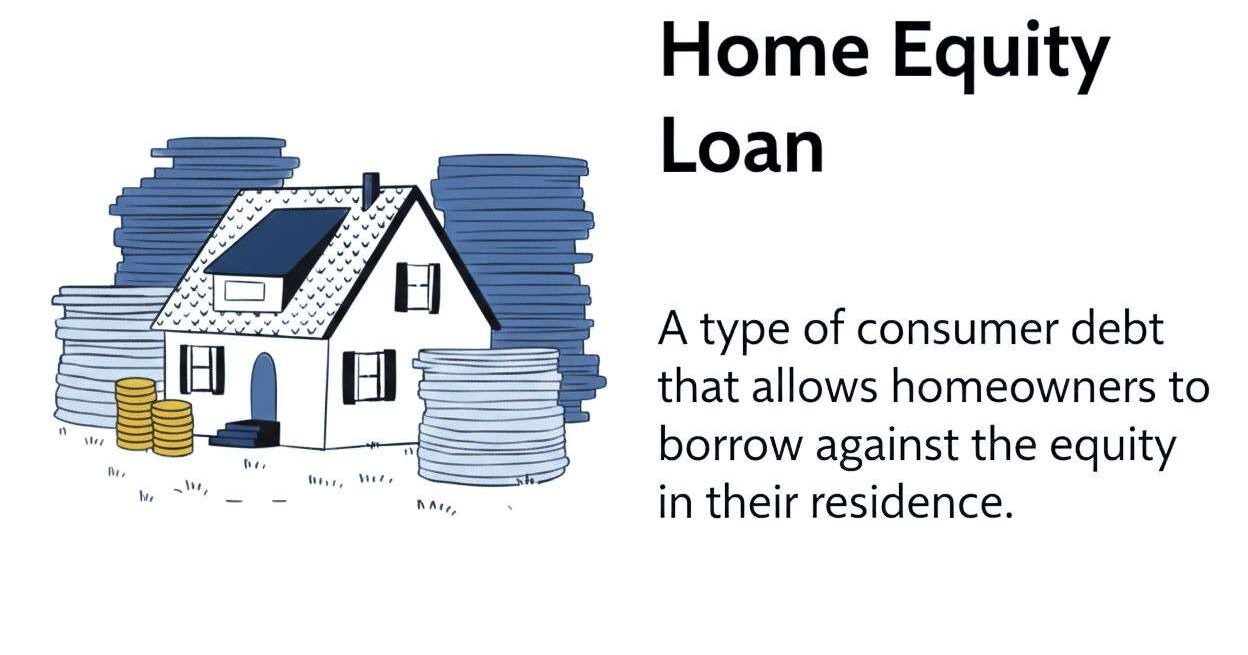
A home loan is a secured financial product that allows homeowners to borrow money against the value of their property. When you repay a portion of your housing loan or when your property’s market value increases, you build equity. This built-up equity can be used to apply for a home equity loan (also known as a loan against property).
This type of property loan is commonly used for business expansion, higher education, medical emergencies, debt consolidation, or home renovation. Since it is a secured loan, lenders usually offer lower home loan interest rates compared to unsecured personal loans.
Understanding Home Equity
Home equity is the difference between the current market value of your property and the outstanding loan balance on your existing Fixed interest rate.
Example:
If your property is valued at ₹1 crore and your remaining housing loan balance is ₹40 lakhs, your available equity is ₹60 lakhs. Based on lender policies and home loan eligibility, banks may approve 50% to 70% of the property’s market value.
Property valuation plays a key role in determining the final loan amount.
How Does a Home Loan Work?
A home loan works by using your residential or commercial property as collateral. After verifying property documents, checking your credit score, and assessing your income stability, the lender approves a lump sum amount.
The borrower repays the amount in fixed monthly EMIs over a chosen home loan tenure. You can estimate repayments using a home loan EMI calculator before applying.
Key Evaluation Factors:
- Property valuation
- Credit score (750+ preferred)
- Income stability
- Existing liabilities
- Debt-to-income ratio
- Repayment capacity
Since it is a secured borrowing option, approval chances are typically higher than unsecured loans.
Fixed interest rate
Home loan interest rates depend on multiple factors such as:
- Credit history
- Loan amount
- Income profile
- Type of interest (fixed vs floating interest rate)
- Lender policies
Generally, mortgage loan rates are lower than personal loan rates but may be slightly higher than standard home purchase loans.
Before applying, compare:
- Property loan interest rate
- Processing fees
- Prepayment or foreclosure charges
- Balance transfer options
- Loan tenure flexibility
Comparing lenders helps reduce overall borrowing costs.
Eligibility Criteria for Home Loan
To qualify for a Balance transfer or loan against property, applicants must meet certain conditions:
- Ownership of a legally clear property
- Age between 21 to 65 years
- Stable income source (salaried or self-employed)
- Good credit score
- Acceptable debt-to-income ratio
Lenders verify property ownership documents and conduct a detailed valuation before approving the housing loan.
Benefits of Home Loan
A housing loan offers several advantages:
- Lower interest rates compared to unsecured loans
- Higher loan amount eligibility
- Longer repayment tenure
- Flexible usage (business, education, renovation, debt consolidation)
- Potential home loan tax benefits (as per applicable laws)
Due to these benefits, many property owners prefer a home loan when they need substantial funds at competitive rates.
Documents Required for Home Loan
Common documents required for housing loan approval include:
- Identity proof
- Address proof
- Income proof (salary slips / ITR for self-employed)
- Property documents
- Bank statements
Proper documentation speeds up the mortgage approval process.
Difference Between Home Loan and Home Equity Loan
| Feature | Home Loan | Home Equity Loan |
|---|---|---|
| Purpose | Purchase property | Borrow against owned property |
| Collateral | New property | Existing property |
| Usage | Property purchase only | Business, education, renovation, debt consolidation |
| Risk | Property mortgaged | Existing property pledged |
Understanding this difference helps borrowers choose the right financial product based on their needs.
Important Considerations Before Applying
Before applying for a housing loan, carefully assess your repayment capacity. Since your property is pledged as collateral, delayed EMI payments may lead to financial complications.
Always:
- Check property valuation
- Review loan agreement terms
- Compare multiple lenders
- Use a home loan EMI calculator
- Evaluate fixed vs floating interest rate options
Frequently Asked Questions (FAQs)
1. How much can I borrow through a home equity loan?
Most lenders offer 50% to 70% of the property’s current market value, depending on your income, credit score, and repayment capacity.
2. Is a home equity loan different from a regular home loan?
Yes. A home loan is used to purchase a property, while a home equity loan allows you to borrow against a property you already own.
3. What happens if I fail to repay the home equity loan?
Since the loan is secured against your property, the lender has the legal right to take possession of the property in case of prolonged default.
4. Can I use a home equity loan for any purpose?
Yes, most lenders allow flexible usage such as business expansion, education, medical expenses, home renovation, or debt consolidation, subject to their policies.
Conclusion
A home loan is a practical financial solution for homeowners seeking funds without selling their property. With competitive home loan interest rates, flexible usage, and structured repayment options, it supports various financial goals.
However, responsible borrowing, proper comparison of housing loan offers, and careful financial planning are essential before making a decision.